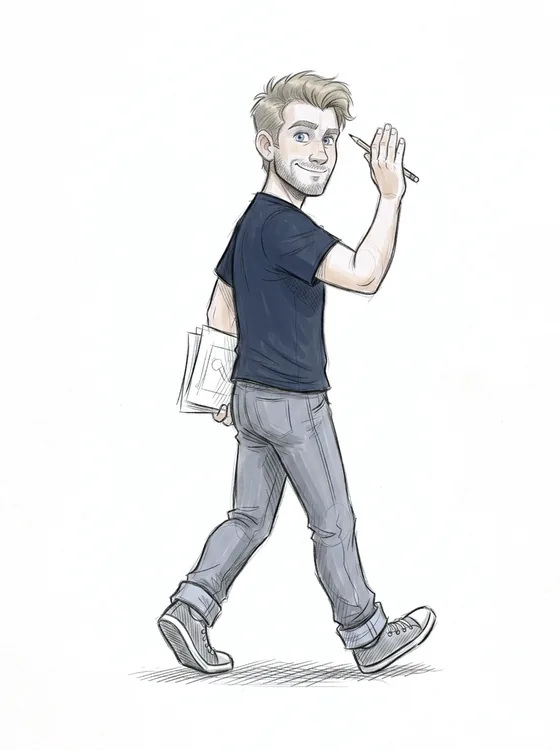
BOSTON, OCTOBER 4, 2026 — code brain, active
Code Brain
A second brain run by an agent fleet on the night shift.

Project questions and answers
What is this?
Code Brain is my second brain, run by a fleet of AI agents I trust to work unattended overnight. It keeps my day-to-day organized and compounds as I use it: the more I feed it, the more it connects and expands on its own. Under the hood it's an Obsidian vault wired to those agents on macOS launchd, across three machines running local and cloud models. The part that earns the name is the overnight loop: while I sleep, agents turn the day's notes into concepts, run each past two separate critics before anything's saved, and land the keepers in the vault by morning. One of them, the Daily Driver, writes the dated strip at the top of this portfolio every morning at 08:30. It's not a chatbot with a vault bolted on; it's infrastructure that does a night's work before I sit down.
Why this approach?
I built it to be a personal assistant that actually knows me and my projects, so every morning starts with context instead of a cold prompt. It reads what I put in, researches the gaps, and connects new topics to what's already there, then tells me where I can get sharper. The stack came second. Of ChatGPT Plus with custom GPTs, Cursor with project rules, or a Claude-Code-native fleet, I went Claude-native because its skills stack into each other instead of me re-pasting long prompts, and the Agent SDK can run a whole morning routine on a schedule, handing off between local and hosted models with no one watching.
What would break?
Three failure modes I've actually hit running a fleet unattended, and the guard each one earned. Silent death: a routine Homebrew Python upgrade changed the interpreter's signature, the OS kernel-killed five overnight jobs, and a whole morning's knowledge loop never ran. Now a fleet-health agent reports each day on what fired and what didn't. Cost creep: a templated task quietly slipped onto Opus, and a run that should've cost about fifteen cents started pushing a dollar before I caught it, so every agent runs under a hard budget cap that kills the run instead of the bank account. Double-writes: two auto-commit systems once raced on the vault and left merge conflicts, so now one process owns vault commits and the agents never touch git directly.
What did I learn?
Running this unattended taught me the hard part of agents isn't the intelligence, it's the plumbing that makes a non-deterministic system safe to leave alone. Every guardrail in the section above started as an incident that cost me a morning or a few dollars: the budget cap, the health check, the one owner per file. That groundwork is the actual job, and it's the part most AI demos skip.


─ METHODS ─
| TASK | AGENT / TOOL | MODEL / COST |
|---|---|---|
| agent runtime | Claude Agent SDK | per-token billing |
| scheduling | launchd (macOS) | local / $0 |
| local inference (heavy) | qwen3.6_35b-a3b-32k on MBP via Ollama | local / $0 |
| multi-CLI critic | Codex CLI + Anti-Gravity CLI in parallel | $0 incremental (subscriptions absorb) |
| local-cloud routing | HybridRouter (qwen3.6_35b-a3b-32k → Sonnet 4.6 fallback) | per-token (capped) |
| animation pipeline (downstream consumer) | Animation Pipeline | see case study |